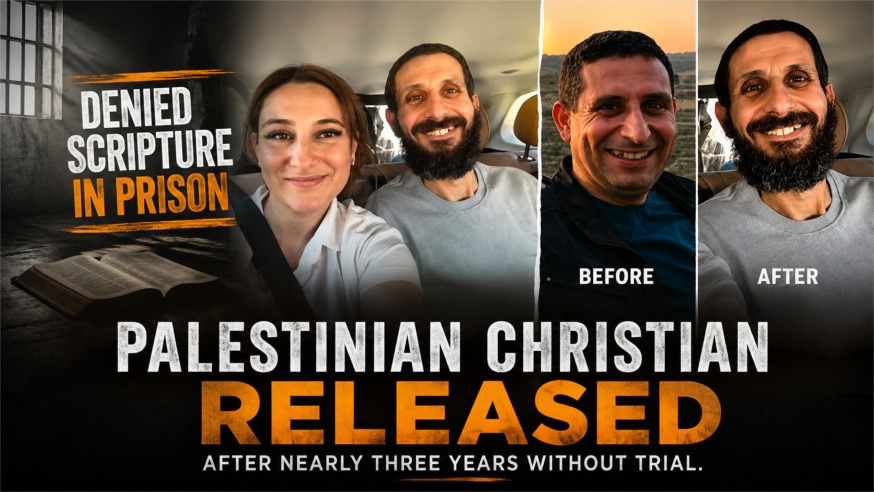
RAMALLAH — When Rami Fadayel was finally handed an Arabic Bible on August 19, he had less than 24 hours left in an Israeli prison. For the preceding 32 months, the Palestinian Christian from the Ramallah area had been held in administrative detention without formal charges or a trial—and without access to the holy book of his faith.
Released on August 20, a visibly frail Fadayel described harrowing conditions at Nafha and Beersheva prisons, including daily beatings, severe food rationing, and the denial of basic hygiene items like razor blades.
His struggle for religious access became a central legal battle led by the Jerusalem Legal Aid and Human Rights Center (JLAC). While Islamic texts were returned to Muslim prisoners after sweeping post-October 2023 confiscations, Bibles remained withheld from Christian inmates.
Legal efforts to secure Fadayel an Arabic Bible and access to a priest resulted in court orders earlier this year. Yet, administrative delays persisted: authorities first provided him with a Hebrew Torah—a language he barely knew—which was later confiscated, before finally providing an Arabic New Testament on the eve of his freedom.
“Man shall not live by bread alone, but by every word that comes out of the mouth of God,” Fadayel quoted from Matthew 4:4 upon his release.
Though Fadayel is now home with his family, his case has set a precedent. Israeli authorities still face an impending court deadline to justify why religious rights were restricted, a decision that could directly impact other Christian prisoners currently seeking access to scripture.